NEWS
Personalized Payment
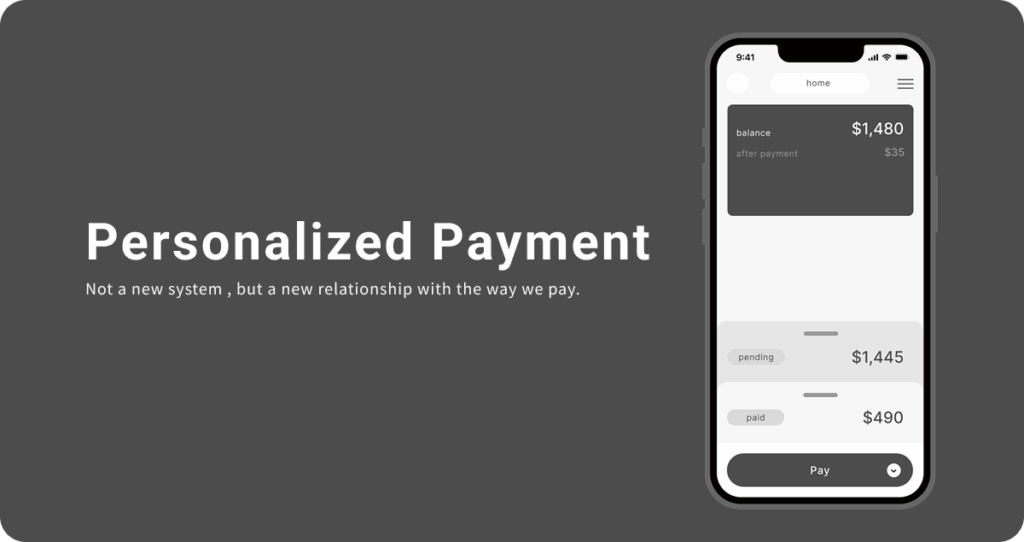
Who Owns the Act of Payment?
We make payments every day.
When buying coffee at a convenience store, or taking the train,
payment has already become part of daily life.
Yet, how often do we stop to design that experience consciously?
Most payment apps have been created for convenience and speed.
What they show is not the person paying,
but the data that moves through the act of payment.
Somewhere along the way, payment stopped belonging to the individual.
It became an action shaped by the system’s logic,
rather than by the person who lives through it.
Bringing Payment into Everyday Life
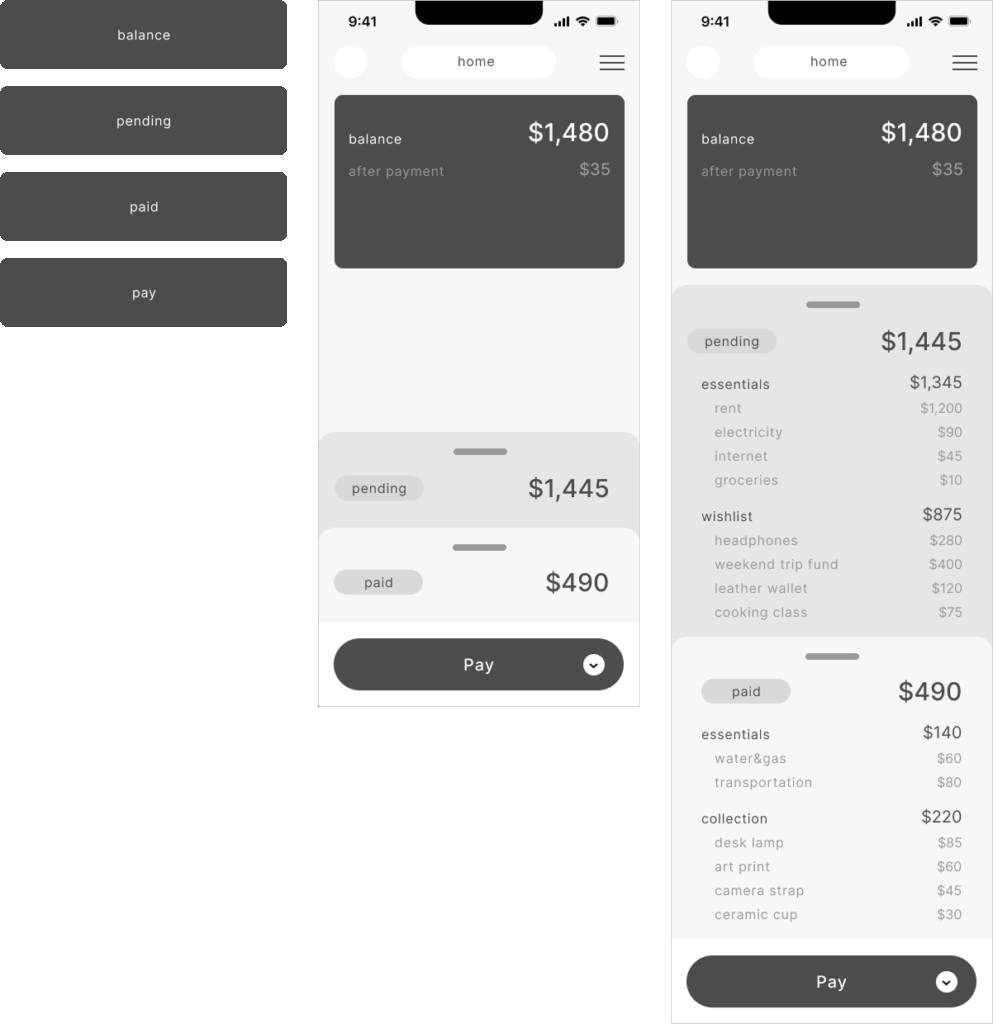
This UI is composed of four layers — balance, pending, paid, and payment.
It represents not just a classification of money, but the flow of everyday life.
Balance represents the “now” — the current state of oneself.
Pending represents the “future” — commitments yet to be fulfilled.
Paid represents the “past” — the record of what has already been completed.
And Payment connects them all — the moment of action,
a trigger that moves one’s situation forward in daily life.
In other words, this UI organizes the flow of money
not as a series of numbers, but as part of a living cycle.
The act of paying quietly shows where one stands within their personal rhythm,
making payment itself a natural part of the everyday flow.
Customizable UI
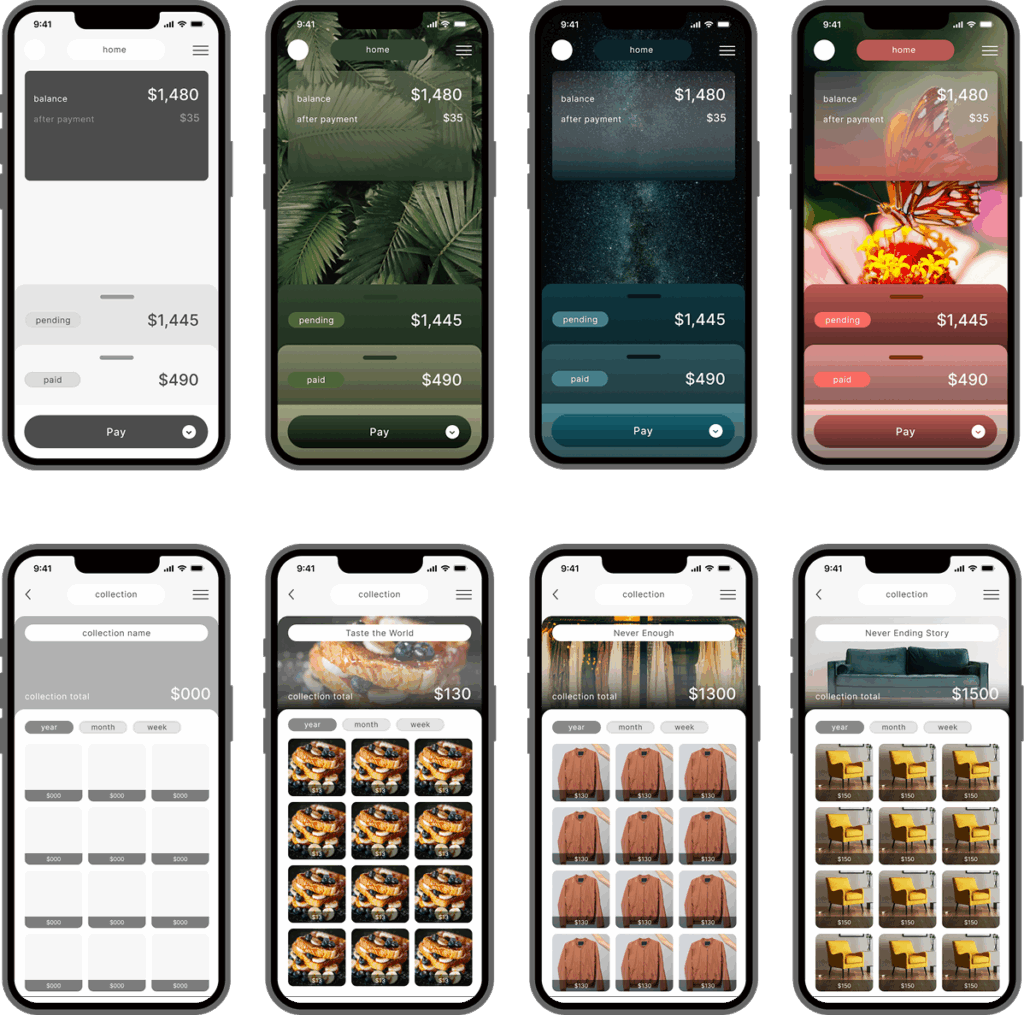
The visual appearance of the interface can be freely changed through wallpapers. Leaf patterns, stripes, classical ornaments — any design can be chosen. You can even set your own photos as the background. No matter how decorative the design, the structure of the UI remains stable by design. That’s why, even with complete freedom of customization, the balance never breaks — it simply highlights individuality. You can also assign purchased or completed items as part of your My Collection, turning your spending history into something you can enjoy and revisit. While reflecting your own worldview, the flow of money remains clear and undisturbed.
Personalized Payment
The computer became the “personal computer”
when technology finally reached the hands of individuals.
In the same way, payment can be redesigned
as something that truly belongs to the person who lives with it.
This interface sees payment not as a mere transaction,
but as an act of understanding and shaping one’s own life.
The movement of money becomes a quiet record of how one lives.
We hope payment can be calmer, more personal,
and perhaps — just a little more beautiful.